

General
What Is Route Management – A Complete Guide


“How do we reduce fuel and labor costs without compromising delivery speed?”
“Why aren’t drivers following the optimized routes we assign?”
These aren’t theoretical questions; they’re daily roadblocks for logistics leaders managing large fleets and thousands of orders across regions. The first reflects a gap in dynamic route planning: most systems optimize on paper but don’t factor in real-time constraints like traffic, SLAs, or fleet mix. The second exposes a failure in execution, drivers don’t trust or follow plans due to outdated apps or lack of route-level visibility.
This blog breaks down what’s missing in traditional route management and how solutions like Locus Dispatch Management Platform and Track and Trace help fix both problems—by aligning planning with execution, and people with intelligent systems.
What is route management?
Route management is the structured process of creating, executing, and monitoring delivery routes based on order priorities, vehicle capacity, traffic patterns, and time windows. It involves assigning the right deliveries to the right vehicles, sequencing stops for efficiency, and adjusting routes when conditions change.
The goal is to ensure timely fulfillment while controlling fuel usage, labor hours, and asset utilization.
How route management differs from basic routing
Basic routing calculates a path from one point to another. Route management handles hundreds of deliveries across regions, factoring in shift schedules, service-level agreements, road restrictions, and loading constraints. It aligns planning with execution by coordinating dispatch, tracking performance, and reassigning orders in real time.

Why is route management important for businesses?
Route management helps businesses bring control to delivery operations that otherwise shift daily with fluctuating order volumes, changing traffic patterns, and unpredictable on-ground disruptions. Without it, a dispatch team handling 1,000 orders may spend hours on paperwork, only to assign routes that overload some vehicles while leaving others underused.
For example, a courier company handling time-sensitive shipments across multiple states relied heavily on manual planning. Each hub followed a different process, and planners spent several hours daily assigning deliveries. As shipment volumes increased, this approach led to inconsistent routing, underutilized vehicles, and rising turnaround times.
Read the entire case study here:
How to reduce manual shipment processes for courier services?
How does routing reduce fuel use and labor hours?
Efficient routing lowers fuel costs by reducing backtracking, idle time, and underloaded trips. When deliveries are grouped by location and matched to the right vehicle size and shift schedule, each route covers more stops with fewer miles. For example, a grocery chain cut fuel expenses and overtime wages by assigning compact, high-density routes to small vans during short shifts, eliminating the need for extended hours and repeat runs. This approach also reduced the number of drivers required per day.
Read more: The Changing Logistics of Grocery Stores with Last Mile Grocery Delivery Route Optimization
How can better routing reduce missed deliveries?
Accurate routing supports drivers by giving them clear, sequenced routes that align with customer availability and time windows. When addresses are validated in advance and stops are prioritized correctly, drivers spend less time searching for locations or waiting on-site. A home appliance brand reduced failed delivery attempts by reorganizing routes so drivers reached customers during confirmed availability slots—making each shift more productive and less frustrating for the driver.
With route management in place, these moving parts are accounted for from the start. At Locus, Dispatch ManagementIQ builds delivery routes that match real-world constraints like order priority, fleet type, and service windows—removing the guesswork from daily planning. If a driver drops out mid-route, Dispatch Management reallocates pending deliveries instantly, preventing service gaps. Track and Trace offers real-time visibility to identify delays and trigger course corrections before customers are affected.
Instead of relying on ad hoc fixes, route management enables teams to respond to issues systematically. It improves handoffs between dispatch and drivers, reduces time lost to poor sequencing, and helps fleets operate closer to capacity, even during peak demand.
Benefits of route management
When route management is done right, the operational gains are immediate and measurable. Here are some of the most tangible benefits businesses:
- Reduces time spent on daily dispatch planning through automated routing
- Improves vehicle utilization by balancing load, distance, and capacity
- Minimizes delays with real-time route adjustments and reassignments
- Enables consistent performance across hubs with standardized workflows
- Increases visibility into delivery status, exceptions, and missed stops
- Supports faster decision-making through on-ground data and performance insights
- Lowers operational costs by reducing fuel usage and manual effort
- Helps maintain SLAs by aligning plans with delivery windows and driver shifts
Suggested read: Route Optimization for Third-party Logistics Operators
Key components of route management

A strong route management system combines several functional layers to ensure that planning aligns with execution. These components form the operational backbone of large-scale delivery networks:
- Order data validation: Cleans and verifies delivery addresses, serviceability zones, and preferred time slots before planning begins. Reduces failed assignments and routing errors at the source.
- Route planning and sequencing: Generates delivery sequences based on traffic patterns, vehicle capacity, order priority, and local constraints. This ensures routes are executable and optimized for each shift.
- Driver and vehicle assignment: Allocates deliveries based on fleet mix, availability, and territory coverage, keeping shift rules and load limits in view.
- Dispatch execution: Pushes route plans to ground teams through mobile apps or integrated systems with stop-level instructions. Includes logic for multi-leg shipments and returns when needed.
- Live monitoring: Tracks driver location and route progress in real time, flags delays or skipped stops, and allows for mid-route adjustments.
- Post-delivery analytics: Captures actual performance data to refine route logic, reconfigure zones, and improve future planning accuracy.
Solutions like those from Locus are designed to support these components as part of a connected delivery ecosystem, enabling teams to move from manual control to coordinated execution.
Suggested Read: What is Route Scheduling? Everything You Need to Know
Common challenges in route management and best practices to address them:
Route management often breaks down at the intersection of scale, complexity, and manual processes. The table below outlines key challenges and the practices that help avoid them:
| Challenge | Best practice to avoid It |
| Inconsistent planning across hubs | Standardize route planning using rules-based automation tools |
| Delays due to manual assignment | Automate delivery allocation using capacity, priority, and shift data |
| Underutilized vehicles and assets | Apply fleet mix logic and load balancing during route creation |
| Missed or failed deliveries | Validate addresses, time windows, and customer preferences before finalizing plans |
| Poor visibility during execution | Use real-time tracking to monitor progress and intervene early if routes deviate |
| Driver resistance to route plans | Equip drivers with mobile apps that offer clear instructions and allow for feedback |
| Lack of data to improve routing | Capture actual performance data and compare against plan to refine future strategies |
Locus helps you bring planning and execution together by offering a connected system of automation, real-time visibility, and performance tracking. Instead of switching between tools or relying on manual oversight, you get a single workflow that standardizes planning across hubs, reallocates deliveries when disruptions happen, and captures route-level insights to improve future decisions.
With this setup, you can codify best practices into your operations, whether that means planning routes in under 30 minutes, adjusting assignments mid-shift without delays, or using past performance data to redesign delivery zones.
What to look for in route management software
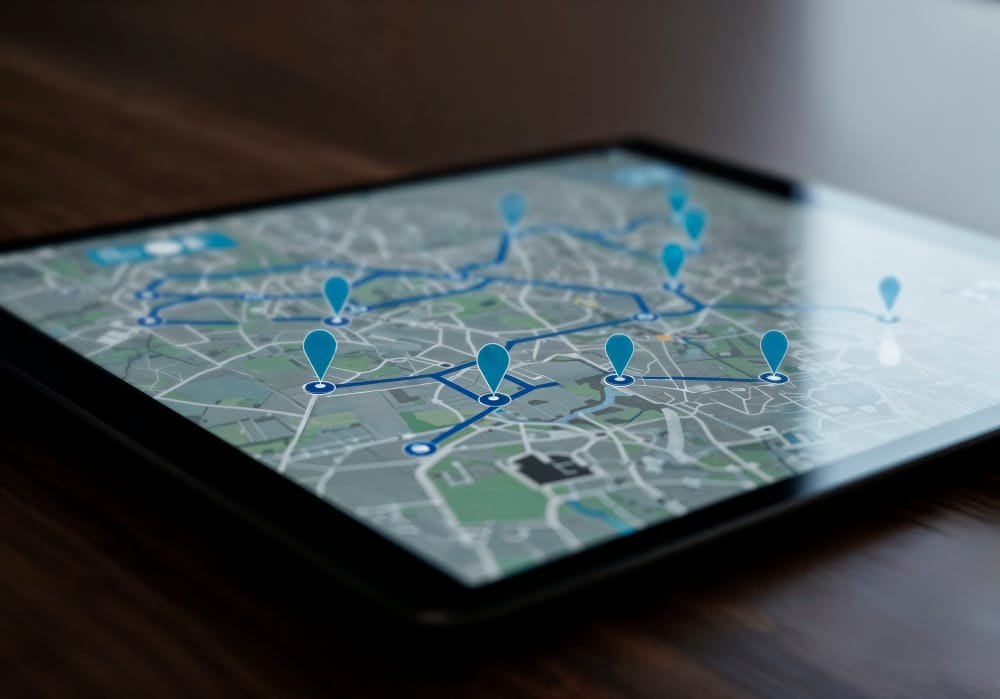
Manual route planning relies on spreadsheets, fixed maps, and dispatcher experience. It often leads to inconsistent assignments, longer planning cycles, and poor visibility once vehicles are on the road.
Automated route management software, on the other hand, uses real-time data and business constraints to create plans that are faster to generate and easier to execute at scale.
To meet operational demands across regions and delivery types, automated systems need more than routing algorithms. They must include features that reflect how your business runs, especially if you’re scaling operations or managing large, distributed fleets. Here’s what to look for:
- Constraint-based planning: Supports shift schedules, vehicle capacities, SLAs, and delivery windows to create executable routes.
- Live re-optimization: Automatically adjusts assignments when conditions change—driver absence, order updates, or traffic delays.
- Driver and vehicle matching: Pairs tasks with drivers based on familiarity, fleet restrictions, or region-specific service rules.
- Integrated driver app: Provides stop-level instructions, navigation, POD capture, and offline functionality in one mobile tool.
- Real-time visibility and exception handling: Flags delays and disruptions in progress, enabling faster corrective actions.
- Territory and zone management: Organizes deliveries into efficient, balanced zones to reduce overlap and travel time.
- Performance analytics: Tracks metrics like route deviation, SLA performance, and fuel use to support operational decisions.
- System integrations: Connects to OMS, WMS, TMS, and CRM platforms to maintain a unified workflow across planning and execution.
How Locus helps with route management
Locus is purpose-built for enterprises that manage complex delivery networks—high order volumes, shifting traffic patterns, multi-vehicle fleets, and region-specific constraints. It replaces disconnected tools and manual processes with a unified system that streamlines every stage of route management, from planning to execution to analysis.
Self-learning routing engine for real-world delivery conditions
Locus is an AI engine trained on over 1.5 billion deliveries. It builds delivery plans that reflect how your operations actually function:
- Considers traffic flow by time of day and location
- Accounts for driver productivity, vehicle load capacity, and shift durations
- Factors in SLA windows, customer-specific rules, and location-level service history
This ensures route plans are accurate and field-ready from the start.
Territory design that improves delivery flow
Using the Dynamic Territory Builder, Locus segments delivery zones by:
- Grouping stops to reduce backtracking and idle time
- Balancing delivery volume across available drivers
- Keeping drivers assigned to consistent service areas to improve route familiarity
This structure reduces handoffs, improves delivery speed, and lowers vehicle mileage.
Automated dispatching and mid-route adjustments
Locus removes delays between route creation and dispatch. The system:
- Assigns deliveries based on proximity, vehicle compatibility, and service priority
- Sends in-app guidance to help drivers manage real-time changes
- Reorders remaining stops when routes are disrupted, without requiring manual input
This helps operations run smoothly, even when conditions shift during the day.
Driver app focused on execution
Locus provides a mobile app tailored for delivery staff:
- Displays stop sequence, navigation, and customer notes in one place
- Works offline in areas with poor connectivity
- Captures electronic proof of delivery and real-time delivery status
- Enables driver feedback, which feeds back into planning logic
This improves adherence to assigned routes and reduces delivery errors.
Centralized control with live route monitoring
Through a single dashboard, teams can:
- Monitor driver location and delivery progress
- Flag early signs of delay and reroute if needed
- Resolve exceptions—like access issues or rescheduling—without switching systems
This enables tighter control over daily operations and faster response times.
Analytics tied to delivery performance
Locus turns operational data into clear, actionable metrics:
- Tracks SLA performance, on-ground execution gaps, and missed stops
- Calculates fuel usage, empty miles, and route deviation
- Highlights inefficiencies by zone, driver, or route type
- Measures cost impact and environmental savings from routing decisions
This helps teams adjust route logic, allocate resources better, and quantify outcomes.
Building a scalable route management system for the future with Locus
For enterprises managing high-volume, multi-region deliveries, route management is a core operational function that directly affects cost, efficiency, and customer experience. Locus delivers measurable improvements at scale, with:
- 99.5% SLA adherence,
- over $300 million in logistics savings,
- and 14 million kilograms of CO? emissions avoided through smarter routing.
What sets Locus apart is its ability to adapt to real-world delivery constraints, vehicle types, shift windows, service-level priorities, and zone-specific conditions, without adding complexity. From automated route planning to real-time reassignments and field-ready driver tools, every feature is built to support large-scale operations.
With built-in integrations and customizable logic, Locus helps logistics teams move from manual fixes to structured, repeatable execution, allowing you to manage deliveries with greater accuracy, lower cost, and fewer disruptions across your entire network.

Route Optimization
What is AI route optimization?
Jul 24, 2025
What is AI route optimization? Learn how it transforms logistics through smart routing, automation, and better decision-making across industries.
Read more
General
Fleet Routing & Tracking: A 2025 Guide To Improve Efficiency
Jul 24, 2025
Discover how modern fleet routing, tracking, and optimization work with real-world 2025 use cases, trends, and actionable best practices for logistics leaders.
Read moreInsights Worth Your Time
















What Is Route Management – A Complete Guide