

General
Complete Guide to Electronic Proof of Delivery and it’s importance

Key Takeaways
- Electronic Proof of Delivery (ePOD) digitizes delivery confirmation through photos, signatures, and QR codes, eliminating paper documentation and reducing human error in last-mile operations.
- Real-time visibility and status updates through ePOD systems help businesses monitor deliveries, generate productivity reports, and quickly address delivery issues or disputes.
- Contactless delivery options through ePOD, including digital signatures and OTP validation, have become essential for meeting customer safety preferences while ensuring delivery verification.
- Locus’s Driver Companion App with ePOD capabilities enables real-time shipment tracking and verification, helping businesses improve delivery accuracy and enhance customer experience through greater transparency.
We live in an age of instant deliveries. Businesses work with seamless digital logistics management systems and don’t underestimate the power of efficient route, order, and transport management systems.
Speed is not the only factor to consider when it comes to deliveries. Shipping fees must be low, fulfillment options must come with choices, delivery forecasts must be accurate, and return processes must be hassle-free for both the business and the customer. In all of this, proof of verification may seem like a very small piece of the puzzle. Yet it is a critical one.
What is Electronic Proof of Delivery (ePOD)?
Document proof of a shipment is known as proof of delivery or P.O.D. This document is issued by the shipper and is intended for the customer. This can be a handwritten proof on paper, typed, or, as most businesses prefer now, sent electronically. Proof of delivery is a legal record of any damage, incompleteness, or non-delivery of the parcel.
Electronic Proof of Delivery, or ePOD, is a digital acknowledgment of a traditional paper delivery receipt or note. With the help of ePOD, last-mile agents can capture data such as delivery confirmation on their mobile devices. It is usually done by taking an electronic signature of the customer after a successful delivery or by capturing a picture of the delivered order.
Why Is Proof of Delivery Important?
Without proof of delivery (POD), businesses face numerous risks that can lead to confusion, disputes, and inefficiencies. Without a digital record of deliveries, it becomes challenging to resolve issues such as lost or damaged goods, delayed shipments, and customer disputes. Customers may question delivery completion, leading to dissatisfaction, while businesses struggle to prove that products were delivered correctly and on time.
Here’s why ePOD is essential:
- Transparency and accountability: ePOD provides a clear, real-time record of each delivery, ensuring businesses can verify completion and track goods. AI enhances this with instant updates, reducing errors in tracking.
- Improved customer experience: Without ePOD, customers lack verification of their delivery. ePOD offers instant confirmation through digital signatures and photos, reducing disputes and improving satisfaction.
- Efficiency and cost reduction: Paper-based documentation is slow and error-prone. ePOD eliminates paperwork, automating data entry and speeding up workflows, leading to cost savings and greater efficiency.
- Fraud prevention and security: ePOD offers tamper-proof records that serve as reliable evidence in case of disputes. AI further strengthens fraud detection and ensures data security.
- Legal protection: Without POD, there’s no proof of delivery completion or ownership transfer. ePOD serves as a legal document, protecting businesses and customers in case of claims.
In short, ePOD powered by AI improves visibility, reduces errors, prevents fraud, and enhances the delivery process for both businesses and customers.
What are the types of data that Electronic Proof of Delivery collects?
Electronic Proof of Delivery helps your business capture data based on the operational needs of your organization. The types of data that Electronic Proof of Delivery collects are:
- Alpha-numeric fields
- Barcodes
- QR Codes
- Custom formats
- Photographs
- Electronic Signature capture
What Are the Components of a Successful Electronic Proof of Delivery (ePOD) System?
Upon arrival at the customer’s location, when the driver or delivery agent accesses an ePOD solution, they can find crucial information such as
- Vehicle information
- Driver information
- The time slot of delivery
- Expected Time of Arrival
- Geographical location
- Order details and specifications
- Customer information
How does ePOD software work?
An Electronic Proof of Delivery software has two components:
- A mobile application that collects information on completed deliveries
- A central management system to monitor, review or amend the data
Once a delivery agent reaches the customer location and fulfills the order, they collect proof of delivery as a photograph, electronic signature, or QR codes on their mobile application. After delivering the order, all the data they have captured is automatically sent to a central management system in real time. This helps the operational team to monitor the status of completed deliveries.
What Are the Benefits of Electronic Proof of Delivery (ePOD) Software?
A sophisticated and intuitive ePOD solution benefits your customer, your on-ground staff, and the decision-makers in your supply chain.
ePod applications, which can be accessed from all types of devices, make last-mile delivery more efficient by ensuring seamless collection, transport, and delivery of goods. Here are six benefits of using electronic proof of delivery for your business:
1. Boosts workforce productivity:
Electronic Proof of Delivery improves the on-site delivery experience of on-ground personnel. With ePOD on their mobile devices, delivery representatives need not carry a bunch of delivery receipts along with the parcel. All they have to do is capture delivery confirmation on the ePOD application, which automatically updates the status of deliveries with supervisors instantly.
It helps set up a standard last-mile delivery guideline for the on-ground staff, speeding up the delivery process, reducing unnecessary paperwork, and enhancing workforce productivity on and off the field.
2. Enhances customer satisfaction:
- One positive delivery experience = Happy customer
- Second positive delivery experience = Repeat customer
- Consistent positive delivery experience = Loyal customer
What should my business do to attract more customers? The answer is simple – focus on improving the delivery experience, and the rest will fall in place.
In a recent Salesforce survey of 15,000 consumers or business buyers, 89% of customers mentioned that a positive customer experience makes them go for another purchase. Real-time interaction through alerts and timely notifications is the most critical aspect of ensuring a positive delivery experience. This keeps your customers informed about the whereabouts of their orders. After delivering the parcel, the agent can send an ePOD to the office staff and the customer in no time.
Since it is both secure and automated, it leaves no room for miscommunication about the delivery or false delivery confirmation by riders.
Replacing manual paperwork with ePOD also builds a professional and consistent buying experience, leaving the customer with a better lasting impression and confidence in the brand.
3. Improves visibility in the supply chain
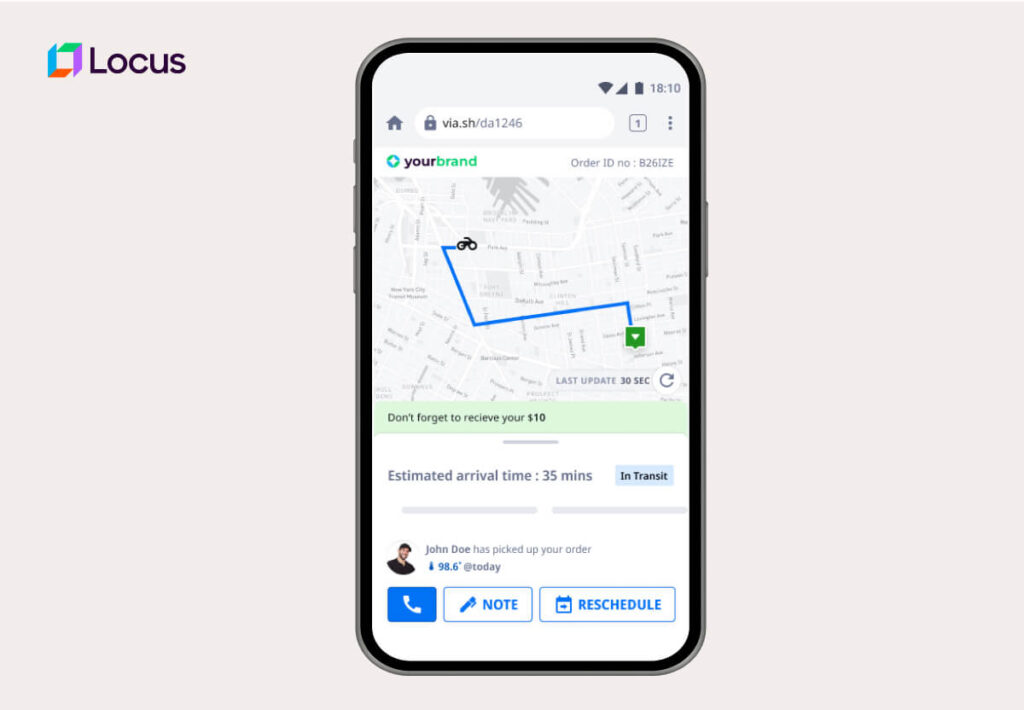
Visibility is fundamental for any organization that wants to improve its operational efficiency and elevate its customer experience in the final mile. A recent APQC (American Productivity and Quality Center) survey confirms that more than 47% of customers want visibility into last-mile delivery. Further, it points out that this visibility is present only for 3% of customers.
ePOD is an essential tool to enhance end-to-end visibility in logistics. It not only simplifies the collection of data recorded by on-field workers but also sends real-time status updates to the office staff and alerts in case of any disputes or issues in the delivery process.
This helps take timely measures like negotiating with the customer or rearranging the delivery. Data sent in real-time help monitor delivery staff effectively, generate daily productivity reports, analyze trends, and identify areas in the delivery process that need improvement.
4. Reduces paperwork and human error
With ePOD, businesses can save on manual hours and eliminate their administrative burden of documenting lost or damaged paper delivery notes. These mobile applications are user-friendly, making daily tasks easier and removing the frustrations of delivery paperwork.
This means drivers are less likely to make errors in the delivery process, which results in greater accuracy in last-mile logistics operations. Paperless proof of delivery is also a sustainable initiative toward green logistics and reducing the carbon footprint.
This means drivers are less likely to make errors in the delivery process, which results in greater accuracy in last mile logistics operations. Paperless proof of delivery is also a sustainable initiative towards green logistics and reducing the carbon footprint.
5. Contactless deliveries
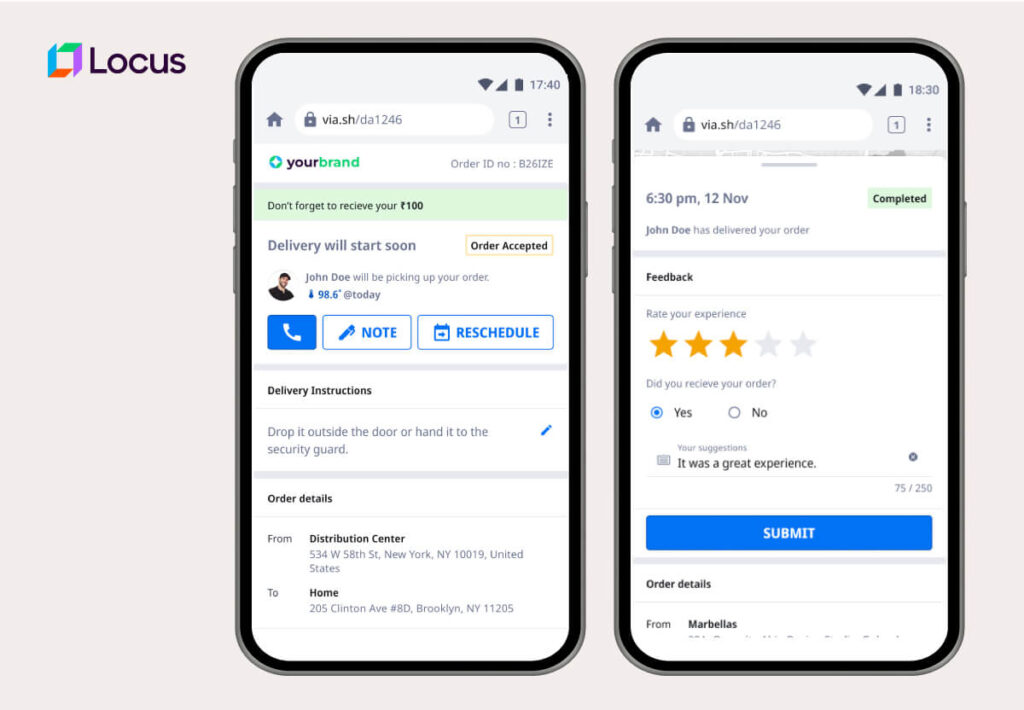
Contactless deliveries gained prominence after the covid-19 pandemic globally. As customers increasingly become health-conscious, delivery service providers, 3PL, E-commerce, or CEP (Courier, Express, and Parcel) businesses have kept contactless deliveries as an option for customers.
But how can Electronic Proof of Delivery facilitate contactless deliveries?
With an Electronic Proof of Delivery, a delivery agent can collect digital signatures from customers through a link or validate OTP after dropping off an order. This helps delivery businesses to validate the completed deliveries and ensure that there are no lost or stolen packages.
Read Also: Ensuring Contactless Food and Grocery Delivery in times of Social Distancing
6. Combats failed delivery costs
A survey conducted with 304 retail executives in Germany, the United States, and the United Kingdom found that the average cost per failed delivery in the United States was 17.2 US dollars.
Failed delivery costs have become one of the biggest concerns for the logistics industry. It affects on-time deliveries and impacts last-mile customer experience.
Locus Fleet Electronic Proof of Delivery Mobile App helps delivery agents to validate customers and inform fleet managers of the delivery status. It provides real-time notifications and alerts on failed deliveries. The data on failed deliveries help fleet managers identify the reasons for it and rectify them.
Add more transparency to your deliveries with Locus’ Driver Companion App
In a recent survey of 3006 consumers worldwide, 60% of them stated that trustworthiness and transparency are the most important traits of a brand. But if you ask experts in supply chain and logistics, they will mention that transparency is the foundation to build a loyal customer base. And the best way to bring that transparency is by investing in a driver companion app like Locus.
The Locus driver companion has an Electronic Proof of Delivery that is user-friendly and convenient to use for drivers or delivery agents. Its Electronic Proof of Delivery solution records shipment statuses and updates them in real time with photos, signature, PIN and so on for more transparency. By ensuring the right order is delivered to the right customer at the right time, it improves the last-mile customer experience.
Smarter Delivery Confirmations with Locus
Locus’s AI-driven ePOD solution brings precision to last-mile delivery. Real-time tracking, digital proof of delivery, and automated record-keeping cut down on paperwork, reduce errors, and shorten delivery cycles. Companies using the platform often see lower operating costs and sharper fleet productivity.
The impact goes beyond efficiency. Faster, more reliable deliveries raise first-attempt success rates and limit the cost of redeliveries. Operations teams gain immediate visibility into delays or exceptions, allowing them to act quickly and maintain service commitments. Customers, in turn, benefit from accurate updates and smoother interactions.
Because the system integrates directly with existing ERP and transport platforms, scaling doesn’t require process overhauls. Businesses can increase delivery volumes with confidence, treating ePOD not as a compliance task but as an asset that strengthens growth and customer trust.
Book a demo today to learn how Locus can streamline your deliveries and improve customer satisfaction.
References:
- https://c1.sfdcstatic.com/content/dam/web/en_us/www/documents/research/salesforce-state-of-the-connected-customer-4th-ed.pdf
- https://www.forbes.com/sites/stevebanker/2023/02/26/last-mile-delivery-visibility-and-vehicle-capacity/?sh=3d89dd3f7f3c
- https://www.apqc.org/resource-library/resource-listing/last-mile-delivery-cross-industry-logistics-practices-report
- https://www.statista.com/statistics/973182/last-mile-delivery-average-cost/#:~:text=During%20a%202020%20survey%2C%20the,UK%20cost%2011.6%20British%20pounds
- https://www.statista.com/statistics/1332294/trustworthiness-transparency-in-marketing/

News
Reliance Now Set to Disrupt Indian E-commerce

Jan 21, 2020
Reliance launches its much-awaited e-commerce venture, JioMart, India’s newest online supermarket. Will it do to e-commerce what it did to telecom?
Read more
News
The Food Delivery Market Battle in India Set to Intensify With Zomato’s Acquisition of Ubereats
Jan 31, 2020
The foodtech industry is expected to heat up with Zomato's UberEats acquisition. What might be the opportunities for logistics and hyperlocal deliveries?
Read moreInsights Worth Your Time

















Complete Guide to Electronic Proof of Delivery and it’s importance